
Cheryl Milton raises the red flags on ‘sinking ship’ in campaign for elected position
Black Mountain Town Council candidate is ready to make hard decisions improve municipality’s financial footing
Fred McCormick
The Valley Echo
October 7, 2026
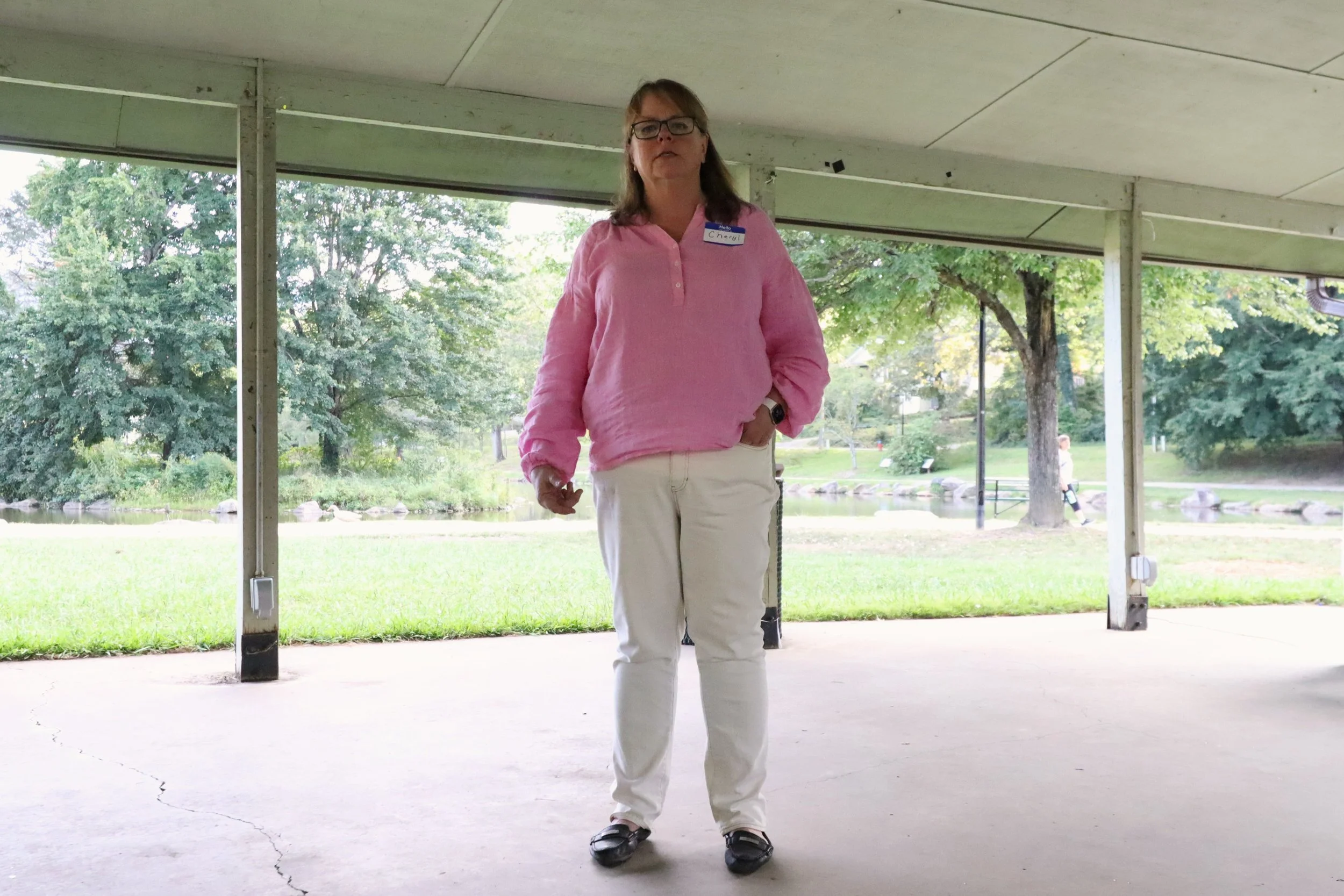
Cheryl Milton is one of two candidates vying to complete the final two years of an unexpired term on the Black Mountain Town Council, as the Nov. 3 election approaches. Photo by Fred McCormick
This profile is one of a series examining the priorities of candidates running for office in the Town of Black Mountain this fall. In-person early voting for the Buncombe County General Election will be open Oct. 15 - 31, with election day held, Tuesday, Nov. 3.
Cheryl Milton is outspoken and blunt when stating opinions about the current state of local government in her hometown of Black Mountain. She makes no attempt to hide those characteristics, whether publicly addressing town officials or speaking to residents about their experiences.
It is a practice that has formed the basis of the former registered nurse and current business owner’s political engagement for decades, but provided no formal say in matters she viewed as critical to shaping the future of the community. Milton is hoping to change that, Tuesday, Nov. 3, when she will be one of two candidates vying to complete the final two years of a Black Mountain Town Council term vacated by the resignation of Pam King.
“I have thought about running multiple times in the past, but this is a season in my life I can put enough work into it to make it advantageous for the town,” Milton said. “I’m not running for this seat for any personal gain, but my honest thought is if we don’t do something in this town, including some major financial changes, we’re a sinking ship.”
Following a budget season in which the town faced a nearly $2 million shortfall in its general fund and approximately $900,000 in its water fund, preceded by the resignation of the municipality’s top two administrators, Milton grew concerned with the decisions being made by elected officials. Growing skepticism became alarm with the announcement of the town’s inclusion on the Local Government Commission Unit Assistance List, according to the candidate.
“We need some new faces, people who can make hard decisions and leaders who are looking out for taxpayers,” she said. “It seems like a lot of the people on the council have been avoiding some of those tough conversations, but I have thick skin, so I’m willing to have them.”
If elected, Milton intends to incorporate realistic expectations into her decision-making process.
“I’d like to be cost savvy and make sure the dollars the town brings in are spent in a responsible way,” she said. “Sometimes you have to learn to tighten your belt and figure out what are true needs and what are wants if you want to make things work.”
Barriers to communication
Black Mountain is one of hundreds of municipalities in the state that employ a council-manager form of government. The structure allows the governing body to set policies aligned with a vision, while professional administrators are tasked with implementing directives and supervising employees. It is a system that can create barriers to communication for the public, according to Milton.
“If employees do not feel comfortable talking to someone outside the workplace, they can feel there is nobody to go to if they have true concerns,” she said. “I’m well aware of the system of government, but if there are issues they are not comfortable going to the town manager with, there needs to be an outlet for that. We just had a situation where a town manager was the final answer for everybody, and that did not seem like an environment that was fair to the public or town employees.”
Accessible leadership is not a new concept in Black Mountain, she continued.
“In the past, employees and town council members lived here, so they would regularly run into each other on the street,” Milton said. “They would talk about hunting, fishing or whatever the thought or concern of the day might be.”
Elected officials are prohibited from issuing direct orders to employees under a council-manager form of government, but may ask questions when seeking information.
“I am not interested in ordering people around, but I think siloing communication within the town, which is what seems to have been happening, can be bad for an organization. We’ve seen the effects of that here,” Milton said. “I think open communication would help town council members have a better understanding of how things are going.”
Restoring healthy working relationships between town staff and elected officials begins with the search for a permanent town manager, according to the candidate.
“Whoever is elected is going to hire a new town manager to move us forward,” Milton said. “You really have to look at people skills when thinking about that position. Yes, we have a strong manager system, but that town manager still serves at the pleasure of the board. You need somebody who will have an open and honest relationship with the council, and the public.”
The hiring process, she added, should include consideration of candidates who are “a good fit for the town.”
“The quickest way to right some of the wrongs we’ve seen here recently is to make citizens feel like their voices are heard,” Milton said. “We need someone who makes the people of this town feel like they matter. I believe it is crucial that we find someone who is truly vested in this community.”
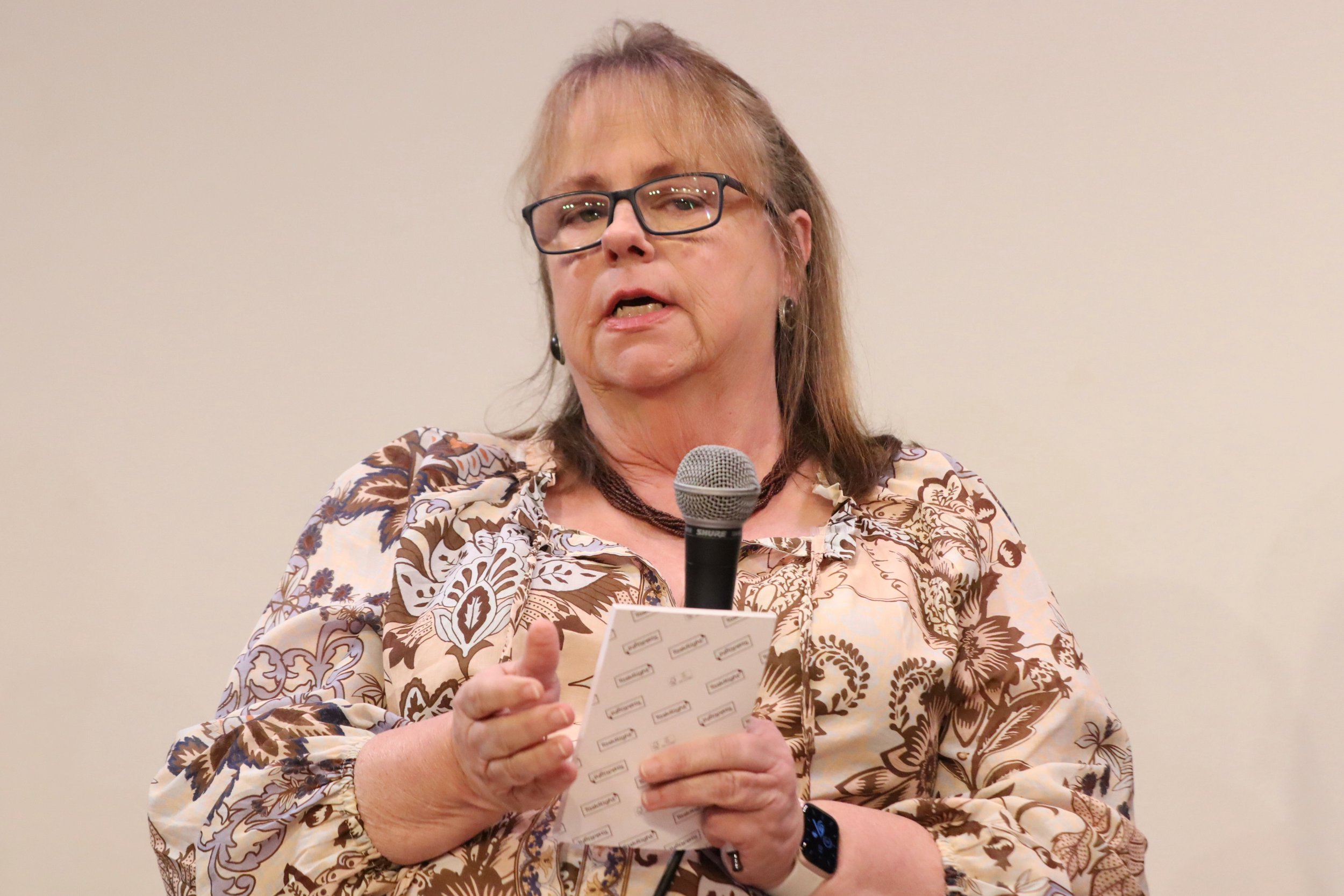
Cheryl Milton responds to questions, Sept. 24, when the Black Mountain Swannanoa Chamber of Commerce presented a forum featuring candidates for Black Mountain Town Council. Photo by Fred McCormick
Seeing the bigger picture
Milton served as the chair of the Black Mountain Zoning Board of Adjustment for six years, while the quasi-judicial body considered significant applications. Some of those proceedings involved contentious disputes.
“That board functions differently than the other town commissions,” she said. “Everyone who was going to speak had to be sworn in and the audience was not allowed to interject. As a board, we had to do all of the talking and decision-making right there in front of the public.”
The position, like the seat she is pursuing this fall, required preparation.
“As a town, we need to be looking closely at where our money has been spent,” Milton said. “I would like to make sure those funds were spent legally, and the jobs they were spent on were completed. That kind of work is part of what the town council is elected to do.”
One of her goals is to understand how decisions related to funding have influenced the town’s current financial situation.
“In a time like this, you have to be considering if we might be contracting services that we could actually handle internally,” Milton said. “We also need to make sure our employees are being efficient and doing good jobs. This is a small town, so in a lot of cases it may be helpful to cross train employees to support in different ways.”
Managing operational costs represents another key component, she added.
“We’ve had this culture where our previous town manager got the town council to grant every wish of each department head,” Milton said. “You can’t be so quick to grant every single ‘want,’ because it can come back to bite you later.”
While the financial impacts of Helene were devastating, she continued, expenditures, including salaries and benefits to fund new positions within the government, many of which were eliminated in the current budget, were increasing at an unsustainable rate.
“It was always going to lead to property tax increases, which I can support in certain situations. If mine increased, I might complain a little, but it wouldn’t change my life,” Milton said. “But, there are a lot of people in this town on fixed incomes, and significant increases in taxes could change their lives. That’s one piece of the bigger picture we all need to be aware of.”
A town that serves the people
Given one word to describe the current relationship between the Town of Black Mountain and the citizens it serves, Milton needs less than a second to respond.
“Crappy,” she said. “If you want my most honest assessment of the current situation. At the same time, I would say that we do have some great employees, like our town clerk for example, who are working hard everyday and making great strides in repairing those relationships, where they can.”
Rebuilding trust in the local government, according to the candidate, will require consistent engagement and transparency.
“The relationship between the public and town is a huge part of a functional government,” Milton said. “When you try to keep things away from the citizens, even small things, they begin to distrust you. I understand there are some things that are not part of the public discussion, at times, but explaining yourself is part of the job of serving on the town council.”
She attributes acrimonious interactions between residents and officials to a cultural shift within the local government.
“Under the previous administration, it was as if many of the employees acted like the people were working for them, not the other way around. Things were presented in a way that it was our duty to put up with whatever they want to do and how they go about carrying it out,” Milton said. “This way of doing things makes people feel like they are being ignored and their opinions are being pushed to the side.”
If elected, the candidate plans to advocate for a town council that is willing to address the issue, which she characterizes as a longtime problem within the municipality.
“I believe that strong people skills might be the most important quality in a town manager,” Milton said. “Whoever is sitting in those seats after the election has a duty to closely monitor the relationships between the town and its citizens. Set the expectation for the manager, and make sure he or she is doing what is necessary to take the concerns of the public seriously and building trust.”
Best decisions for the largest number of people
Despite her vocal criticism of elected officials, administrators and some department heads within the Town of Black Mountain, Milton is confident in her ability to establish healthy working relationships within the town, if elected.
“I don’t have a problem working with people. I’m not running for town council to make new friends; I have enough friends,” she said. “But, I truly believe if you are a strong person who has compassion for others, you can build solid professional relationships.”
As the town is confronted with a series of issues, including the future of its public safety building, sustained tension with citizens and financial setbacks, resolving personal disagreements is not a priority for Milton.
“The biggest problem for the town right now is the future of the public safety building,” she said. “This is something that we have to address right now, because we can’t continue to have our firefighters sleeping in the building across the street, which Black Mountain Presbyterian Church has been kind enough to allow us to use.”
Providing emergency responders a safe operational facility is an obligation of the town, according to the candidate.
“We have yet to have a structural engineer fully assess the current building,” Milton said. “My thought is if the brick part of the structure can not be salvaged, but the bays can, then we should look at leaving the fire department where it is. We can then explore building a new station where the current one stands.”
Additional information and public discussions are needed before any decisions are made, she continued.
“It’s not something you can just look at and say, ‘well, we have to build a new building on the outskirts of town,’” Milton said. “You have to hear the concerns from all sides and make the best decision for the largest number of people.”
While that philosophy is simple, according to the candidate, it is one she intends to restore, if elected.
“I’m a big enough person to say what I feel needs to be done,” Milton said. “I’m not interested in a system where I vote one way for certain things to get others to vote for things I may want later. Every single vote I make, even if it’s for something I’m not personally in favor of, I will consider what is the best decision for the most residents. I think it’s the duty of the council and mayor to serve the people who elected them.”