
Norfolk Southern Railway to resume service through Swannanoa Valley
A-S Line to carry first train since Helene through WNC
Fred McCormick
The Valley Echo
April 16, 2026
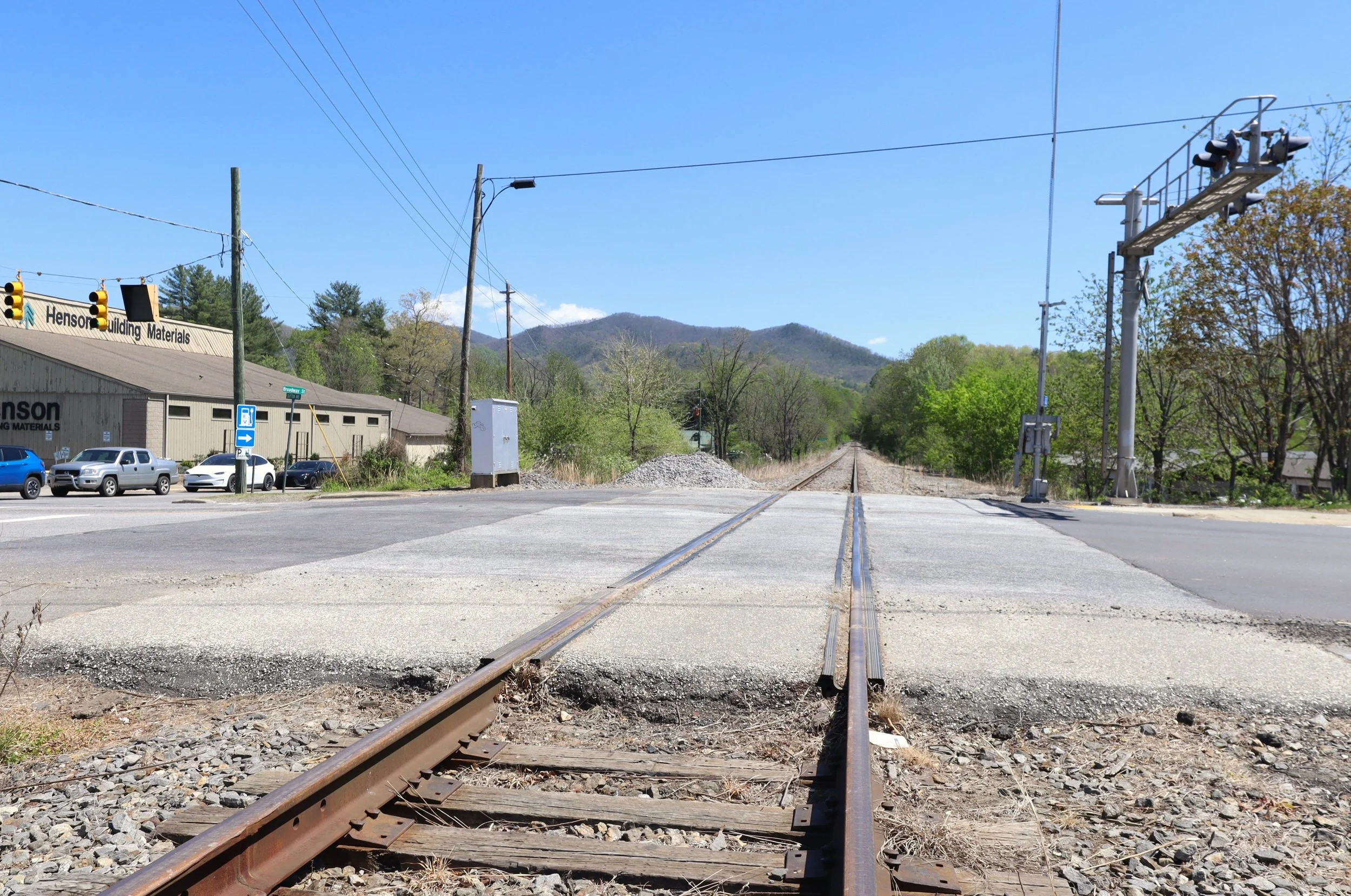
Railroad service between Black Mountain and Old Fort will resume, April 18, as Norfolk Southern will dispatch the first train from Asheville to Newton since Helene. Photo by Fred McCormick
A familiar sight and sound will return to the Swannanoa Valley, beginning around 8:30 a.m., Saturday, April 18, when service resumes along the Norfolk Southern Asheville-Salisbury Line between Asheville and Newton.
The first train to run on the section of tracks between Grove Stone and Old Fort since severe and widespread destruction from Helene forced the temporary closure of the transportation corridor is scheduled to depart at 8 a.m.
The rail company, which owns and operates nearly 20,000 miles of rail lines in 22 states, east of the Mississippi River, resumed freight service from Eastern Tennessee into Asheville on its A-S Line last May, following multiple storm-related projects in an area between Newport, Tennessee and western N.C. Crews began working on the final 16 miles of track last summer.
A geometry train, which utilized one engine and two cars to analyze the condition of the tracks, traveled the route, April 7, completing the inspection. Representatives from Norfolk Southern will be at the Old Fort Depot, where the westbound train is expected pass around 10 a.m., greeting train spotters and hosting giveaways and safety presentations.
The Old Fort Loops, completed by the Western N.C. Railway in 1880, incorporate a series of seven tunnels and 9 miles of track to navigate the 1,100-foot climb from the western McDowell County town to east Buncombe. The section of railroad was acquired by Norfolk Southern in 1999.
With the return of freight service for the first time in 19 months, residents can expect to see rail traffic return to levels not seen since before the storm. Norfolk Southern wants to remind residents of the importance of staying alert around railroad tracks. Members of the public should cross train tracks only at designated crossings and never walk on tracks.