
Brittany Williams steps forward with a fresh perspective and concern for Black Mountain
Town council candidate compelled to confront ‘us vs. them’ culture
Fred McCormick
The Valley Echo
October 5, 2026
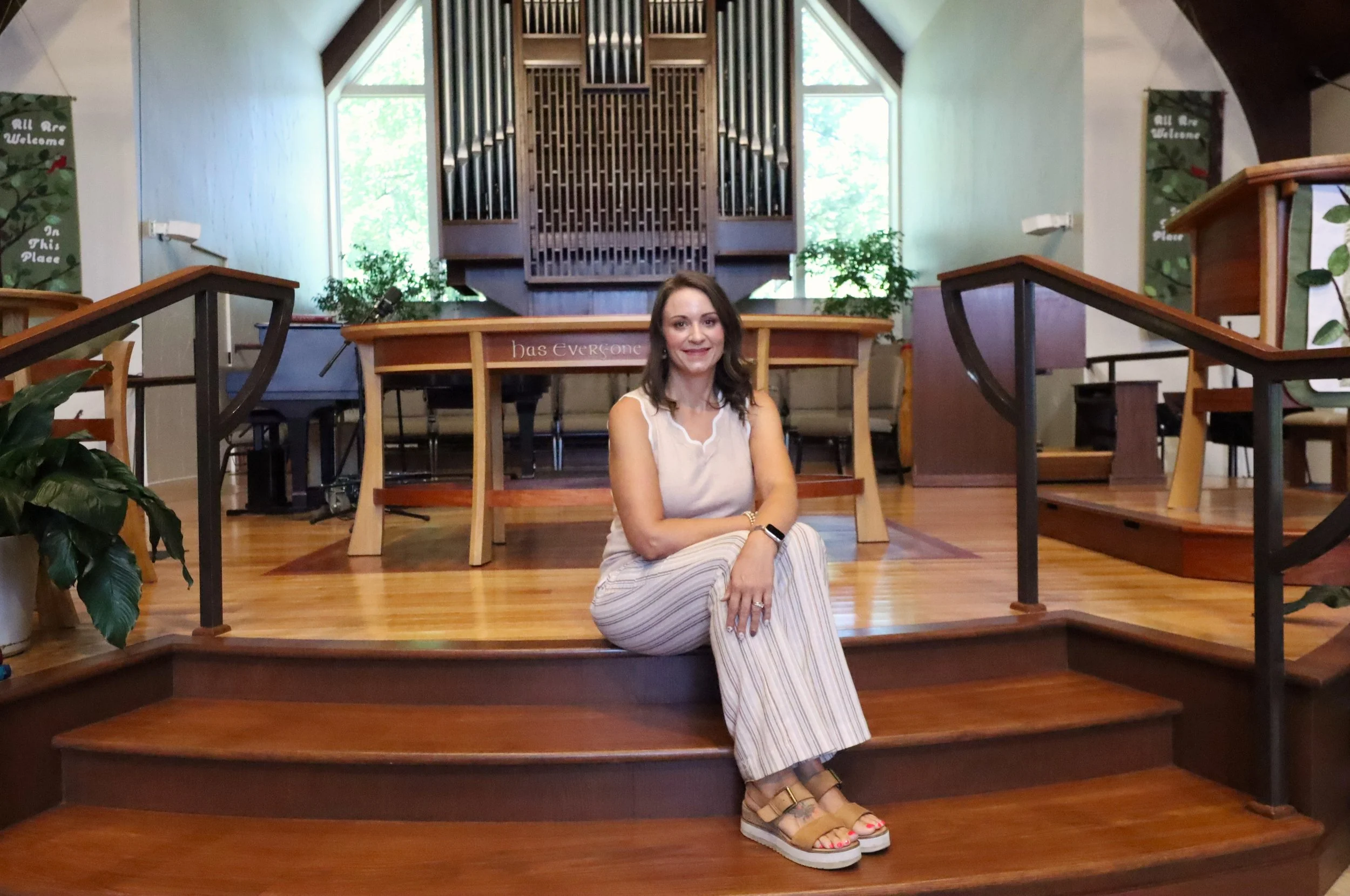
Brittany Williams is one of four candidates campaigning for two seats on the Black Mountain Town Council. Photo by Fred McCormick
This profile is one of a series examining the priorities of candidates running for office in the Town of Black Mountain this fall. In-person early voting for the Buncombe County General Election will be open Oct. 15 - 31, with election day held, Tuesday, Nov. 3.
Brittany Williams is the proud daughter of a former longtime recreation and parks director for the Town of Black Mountain. She chose to follow in his footsteps, working in the same department from 2014 through 2018. While her career path led to her current position as the director of congregational life and children’s ministry for the Black Mountain Presbyterian Church, her connection to the town remains as a resident and wife of a local firefighter.
Her understanding of the importance of cordial relationships between public servants and citizens has made it difficult to watch, let alone approve of the interactions witnessed by the public in recent years. It was an assessment that featured heavily in her decision to pursue a seat on the Black Mountain Town Council in the Tuesday, Nov. 3 election.
“My motivation for running comes from watching, seeing and hearing some of the most atrocious things, coming from interactions people have had with the town,” said Williams, one of four candidates vying for for two, four-year terms on the town council. “My worry is that a culture was created within the town government of an ‘us vs. them’ mentality. I’m a firm believer that just because you can, it doesn’t necessarily mean you should.”
A graduate of Owen High School who went on to earn a bachelor’s degree in mass communication, with a focus in broadcast journalism, from University of North Carolina Asheville, she later received a master’s degree in parks, recreation, tourism and sports management from N.C. State University. If elected, the candidate plans to advocate for a more responsive and approachable government.
“I grew up with parents and grandparents who instilled in us that we are to serve one another in our community, especially in times of crisis,” Williams said. “Mr. Rogers has always been one of the people I looked up to, and he, being a Presbyterian minister, was very much about helping other people and serving the youngest and oldest of the community.”
That philosophy was once prevalent among employees of the town, according to the candidate.
“How do we take the toxic culture that seems to exist currently, even if it isn’t quite as bad as it has been, and shift that to a more welcoming community-minded environment?” Williams said. “We need the citizens, visitors and business owners here to not feel like they have to walk on eggshells and be confident they can go to the town when they have a problem.”
Surveying the issues
Williams did not closely follow town business after stepping down from her position with the municipality in 2018, but she did hear “occasional rumblings.” When she began regularly attending and watching town meetings, her prior experience as an employee provided enough insight to be a conscientious observer.
“From my perspective, it seems like the town has not been in a great position for a lot of years,” she said.
When she decided to run for a position on the town council, Williams was interested in learning about the views of other local residents. She launched a “What Matters to You?” survey, asking open-ended questions that encouraged respondents to share concerns and things they enjoy about Black Mountain. The data collected by the completed surveys indicated patterns, according to the candidate.
“The public safety building was definitely the number one issue, and the second was the lack of communication and transparency from the town government, which included a general frustration about not being able to get in touch with people,” Williams said. “The third would be fiscal negligence. A lot of stuff has to go down to put you in a position like that.”
While the devastation of Helene exacerbated the situation, she added, prior decisions by staff and elected officials lacked foresight.
“I would point to things like overstaffing in some of the departments, and without doing a deep dive into it, I would question if additional services the town has taken on were absolutely necessary,” Williams said. “Also, not having a general deferred maintenance plan left us in a situation where everything is more urgent and reactive when things come up. There hasn’t been a proactive long-term view of how to address the town’s growth and quality of services the town provides.”
Communication with town staff, according to feedback she has received, is frequently characterized as challenging, and sometimes frustrating.
“People have real issues, call the office and they either don’t get a call back or it takes a long time before they do receive a response. Then, when they do get a response, they don’t understand it,” Williams said. “If you are speaking in terms of zoning or planning language, the average person doesn’t understand the technical language associated with it. If you seek clarification and are redirected back to the code, you’re left not fully understanding and possibly dealing with enforcement by that point.”
In her past role operating the Lakeview Senior Center and planning recreation events for the town, the department prioritized swift and clear responses to inquiries, according to Williams. .
“The way I was trained in my professional career is that a return phone call or email should take place within two business days. But, the sooner you can respond, the better,” she said. “It’s also important for people to know they can call and they can ask questions. If you called our office, we would answer the phone.”
Professional standards in town facilities are established and maintained by the town manager, Williams added.
“I don’t want the town council to have more control of town employees, because that’s not the role of the town council,” she said. “If you have a good town manager, and a good relationship with that manager, you can share concerns that you’re hearing and they will address those concerns.”
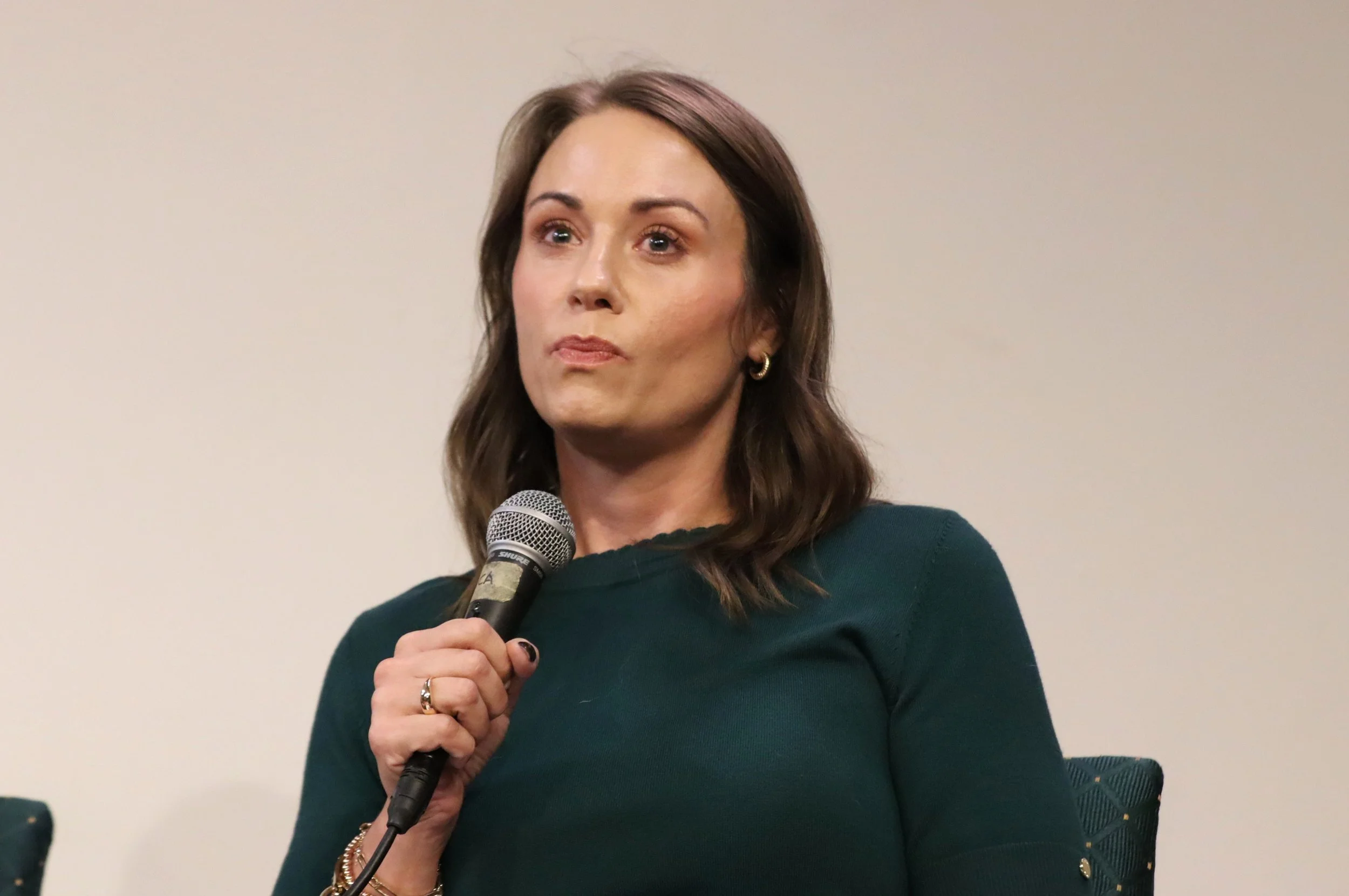
Brittany Williams addresses an audience in the Black Mountain Center for the Arts, Sept. 24, in a candidate forum hosted by the Black Mountain Swannanoa Chamber of Commerce. Photo by Fred McCormick
Planning and prioritizing
The Town of Black Mountain has been without a permanent town manager for nearly nine months, while approximately 40 Helene recovery capital projects remain ongoing. The municipality was recently included on the Local Government Commission Unit Assistance List, and the public safety building, which housed the police and fire departments, was deemed unsafe last spring. Officials were confronted with an approximately $2 million shortfall in the general fund and nearly $900,000 deficit in the water fund, entering the current fiscal year.
The wide array of problems within the town require two things, according to Williams: planning and prioritization.
“We have to sit down and take an inventory of everything within the town. All of the employees, all of the buildings, all of the programs and services, the capital projects and each item should be prioritized. Every dollar you spend on one project is a dollar you don’t spend on another project,” she said.
Critical infrastructure issues, like the public safety building, require careful consideration, thoughtful discussion and planning, according to the candidate.
“Of course I believe they need a proper public safety building. The reason we have a substation south of the railroad tracks is because we need to have a presence on both sides of the tracks,” Williams said. “But, could we potentially build a new public safety building on the south side of the tracks, then build a new substation on the opposite side?”
It is an example of the kinds of questions that should be considered, publicly, she continued.
“You can’t just say the state gave us this land, so we’re going to build this $22 million building on the edge of town. Maybe that would be the most effective thing to do, but also, maybe it’s not,” Williams said. “This is something that absolutely needs to be planned and carefully thought out.”
Long-term planning for projected growth will also allow the municipality to balance the needs of infrastructure.
“There are ways of exploring avenues of funding that are different from what we have done,” Williams said. “If we find that in our current situation a bond makes sense, then the people vote on that. A bond has to be paid back, but it could be used to pull in as many capital projects as we can. Alternative funding sources are something we need to be considering.”
The town council candidate would be open to exploring all options to address issues she has identified within the government, but a path forward will face challenges without an engaged community.
“It is imperative that there is mutual respect and trust, which, from what I am seeing and hearing, is non-existent, at the moment,” Williams said. “There is this culture of, ‘the town is the town and will make decisions because it can, and you just have to do what we say.’ If you want buy-in from your community, you have to explain why you are making the decisions you are making.”
A pitch to rebuild trust
A return to a trusting relationship between the town and its citizens will take time, according to Williams, but the methods are readily identifiable. Correcting the current course begins with hiring an experienced town manager who can foster a strong internal culture.
“We need someone who understands the importance of community and will hold department heads accountable, while also communicating with the public,” she said.
As the town plans to readvertise the position after the election, there are immediate impactful changes that can be implemented, according to the candidate.
“Consistency, results and action, so if you say you’re going to do something, then you do it,” Williams said. “One thing I hope to bring to the town council is a willingness to explain the decisions made, why they were made and how they might impact residents. The bottom line is, people want to know.”
Context is important to Williams when analyzing the current state of the town.
“We all live in the here and now, but we’re in this position because of decisions that were made, or not made, over the past 30 to 40 years,” she said. “This didn’t happen overnight, it has been a snowball going down the mountain. Stopping it will require thoughtful planning, being proactive, good leadership and communication.”
Williams is offering her perspective and willingness to work in her campaign for the seat.
“I genuinely care. This is my town. I grew up here, stayed here and am raising my family here,” she said. “It breaks my heart to see what’s happening. I just want people to vote for who they think represents what they want this town to be.”