
Black Mountain Tailgate Market blossoms in dual downtown venues
Spring Market Series to feature vendors at Foothills Grange and Old Town District
Fred McCormick
The Valley Echo
March 5, 2026
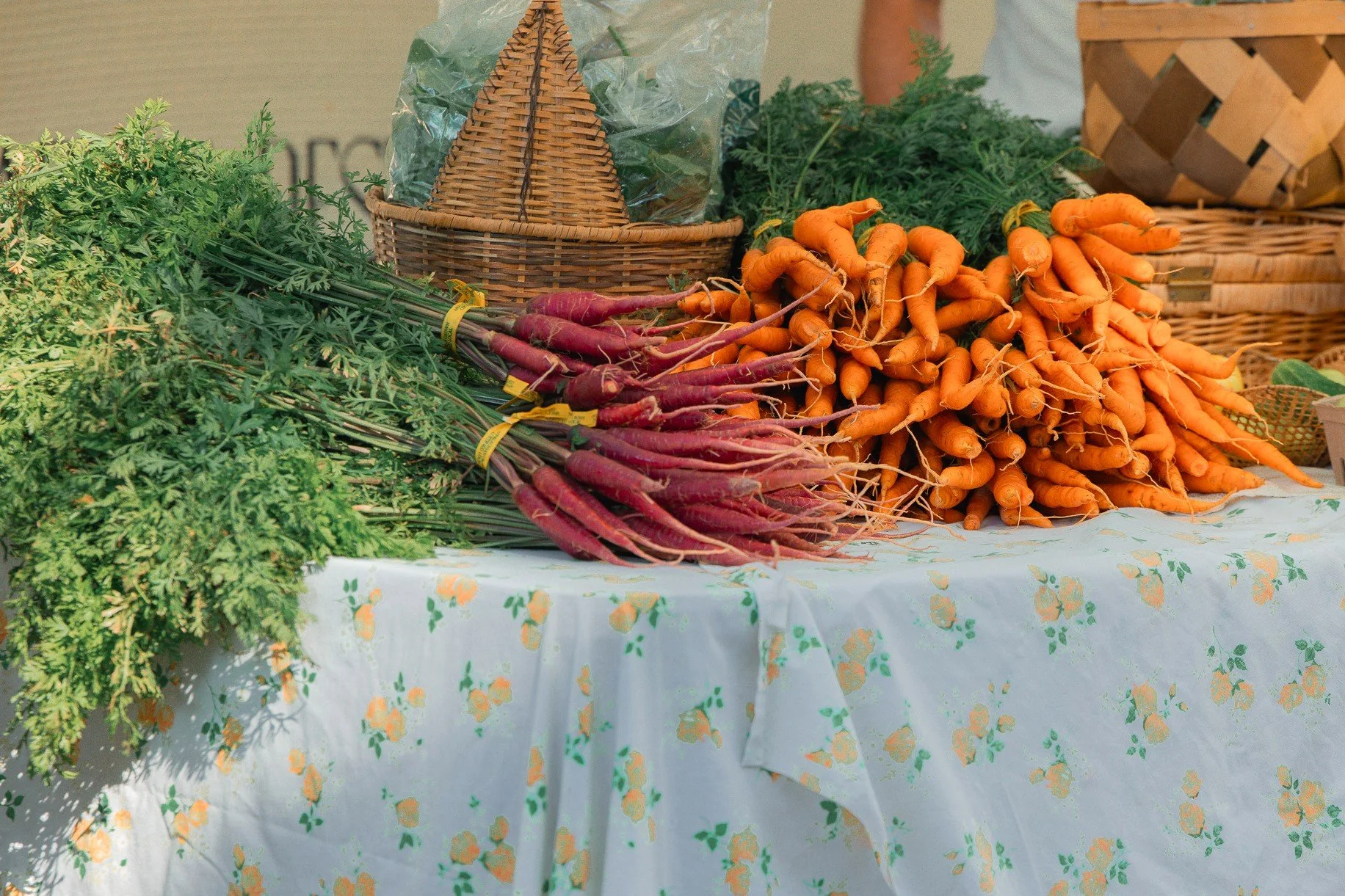
The Black Mountain Tailgate Market Spring Market will debut in a new location, March 7, as the eight-week series partners with Foothills Grange and Old Town District. Courtesy photo
A season that traditionally symbolizes renewal and growth will get underway, from 10 a.m.-2 p.m., Saturday, March 7, when a pair of downtown venues host local farmers, bakers, artisans, live music and libations.
As the Black Mountain Tailgate Market Spring Market Series blossoms in two new locations—Old Town District and The Cherry Pit, behind Foothills Grange—the weekly gathering will highlight fresh produce from area growers while introducing a program designed to increase accessibility to healthy food options.
Entering its second year, the spring market will debut the new setting, taking shoppers from Cherry Street to Black Mountain Avenue, where the partnering businesses will host up to a total of 60 vendors. The event is designed to increase visibility for the BMTM, as the nonprofit organization launches its Nourish Appalachia Project, which utilizes funds raised within the community to offer access to locally grown food for households that qualify for the Supplemental Nutrition Assistance Program (SNAP).
The eight-week series began as a pilot program, according to BMTM Director Jacqueline Smith, who introduced the spring market in response to feedback from the community.
“Not only does this expand the amount of time we are able to serve the community and be a platform for this exchange of goods, it also increases the amount of time we are able to serve our food access participants, who are our neighbors and families who need extra support and delicious nutrient-dense foods,” she said.
Prior to the main season, which enters its 32nd year, Saturday, May 2, at its traditional location behind the First Baptist Church of Black Mountain, the BMTM is eager to bring members and vendors to the heart of downtown, each Saturday through March and April.
“The McKissicks, of Foothills, have worked very hard for a long time to cultivate this family-friendly area at The Grange, and we’ve seen the same thing from the folks at Old Town District, Louise’s and the Black Mountain Avenue crew,” Smith said. “These are just some of the local business that make this community exceptional. They’re pillars of the community and the market sees itself as another pillar, so we’re excited to partner with them and we believe this expansion will have a ripple effect that supports the other businesses in town.”
The BMTM Spring Market Series will feature an array of vendors offering produce, artisan cheeses, locally raised meat, baked goods and other offerings at both locations, while presenting live music in the outdoor area at OTD, which will include farm-fresh provisions, produce, food staples, pottery and an information booth. The Cherry Pit, a grass field located below Cherry Street, will feature artisan goods, handmade items and baked treats from local merchants, while both businesses will serve beverages.
The environment allows attendees to enjoy spring time in the mountains, according to Smith, while connecting local growers to a new part of town.
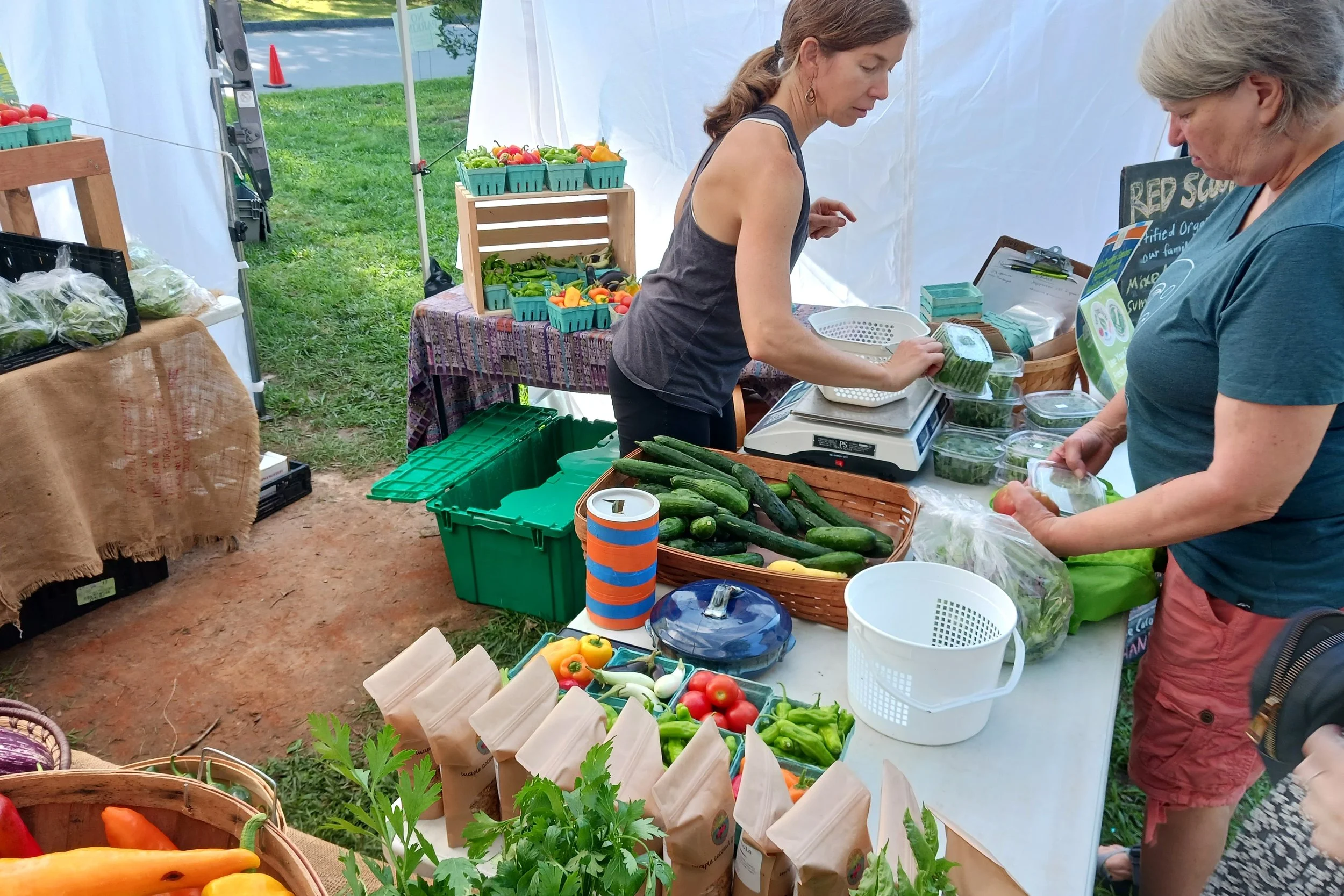
As many as 60 local farmers and food producers will be featured each Saturday in March and April, as the Black Mountain Tailgate Spring Market debuts at Foothills Grange and Old Town District. Courtesy photo
“It really taps into a whole new audience for people who may not have made it a few blocks up to our main location,” the director said. "Not only does that help the market with visibility, but it connects us with a lot of our sponsors and adds to the human connection we try to create there.”
The spring series will also provide an opportunity for the nonprofit to implement the Nourish Appalachia Program, which is designed to strengthen its existing food access initiative. Funding for the initiative was raised last year, due to uncertainty regarding federal benefits, with approximately $7,000 remaining for 2026, according to Smith.
“One of the biggest benefits of this spring market series is that allows us to continue our food access programming further into the season, which ultimately benefits the families who rely on assistance but still want to buy local goods,” she said. “The world of federal funding is beset with challenges, and it doesn’t look like things are going to get easier for people, so we’re trying to get ahead of that.”
The 501(c)(3) organization will activate its available funding for the spring season, introducing a local Double SNAP initiative complementing and expanding upon existing programs, including the Appalachian Sustainable Agriculture Project (ASAP) SNAP doubling program. The BMTM will allow SNAP participants to acquire market tokens through the use of EBT cards and return a match for every dollar, up to $20. In conjunction with ASAP’s fruit and vegetable SNAP incentives, which an additional match up $20, the local program will “significantly increase purchasing power” for fresh produce, Smith added.
The director credited the market’s community-led board for its extensive work developing the Nourish Appalachia Project.
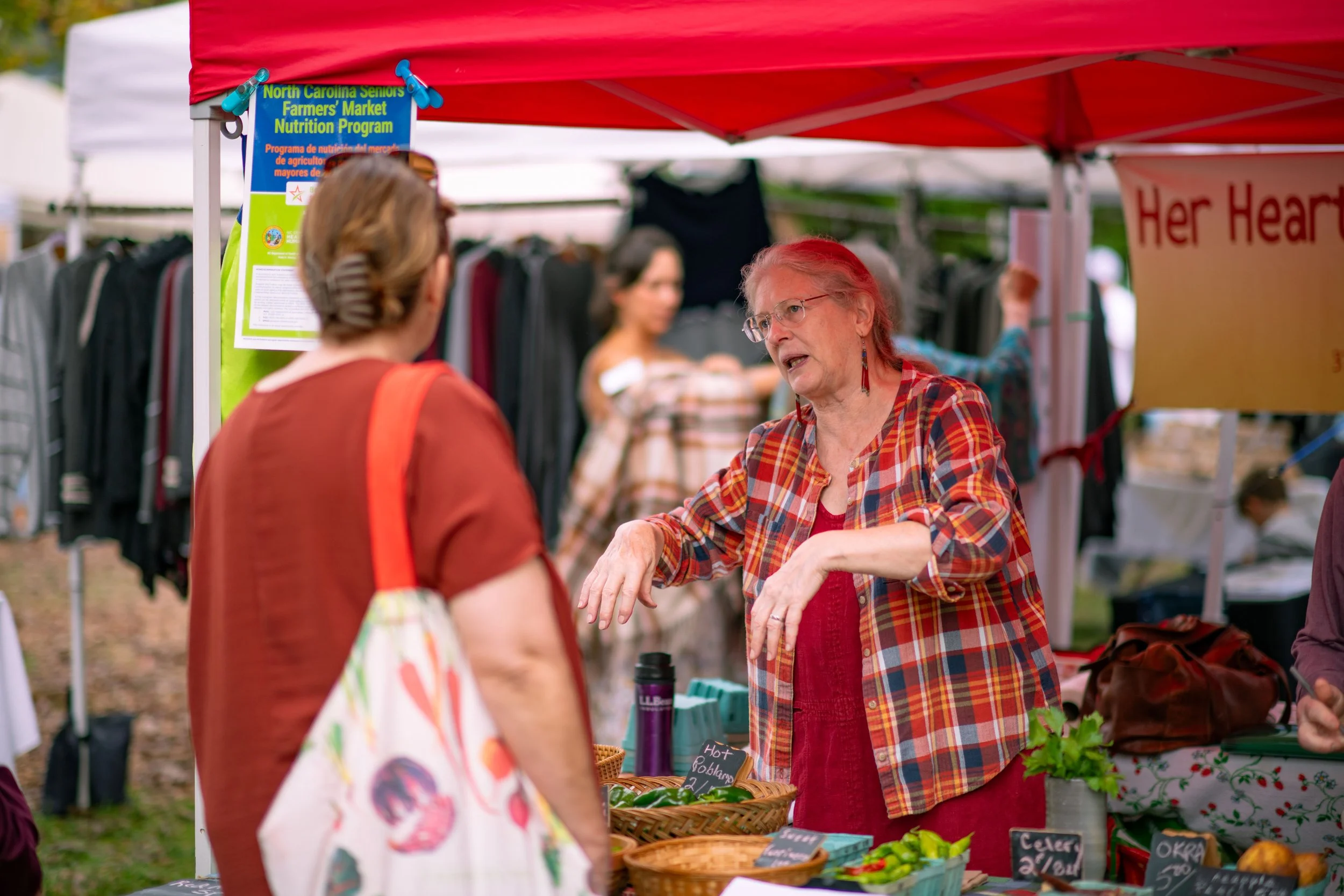
Fresh produce, locally sourced meats and artisan goods will be among the variety of products offered in the Black Mountain Tailgate Market Spring Market Series, which begins, March 7, in downtown Black Mountain. Photo courtesy of Logan Galloway
“Essentially this is the market’s way to focus solely on food access and simultaneously lift up people in the community,” she said. “It’s a way for us to create awareness and really shine a light on the importance and hearts of all these people who contribute to the market and the broader community and support them in a very real way.”
The program represents the nonprofit’s latest community outreach effort, an increased area of focus since Helene.
“I really want to applaud our board, because we were officially granted nonprofit status early last year, coming off the heels of Helene,” Smith said. “One of our newest board members helped us raise almost $40,000 through a grant, which we were able to distribute to individuals, farmers and organizations that needed extra support.”
Current funding allows the BMTM to introduce the Nourish Appalachia Project as pilot program through the spring market season, according to board president Kiersten Hall. Food access represents the first tier, she added.
“The next tier we are looking at working with community pantries,” Hall said. “We have thousands of dollars already that allows us to purchase from our local vendors and growers and take those items to at least two community pantries we already have relationships with. They know their clients, so they tell us specific things people area looking for.”
The BMTM Spring Market Series is an opportunity to “shine a light” directly on the impact of local support, according to Smith.
“Part of our goal is to do some fundraising during this eight-week period, and strengthen our connection within the community,” she said. “Hopefully, that will be a catalyst for additional funds coming in, which would allow us to carry a program like this throughout the main season, and beyond. Ultimately, if I had my way, this would be a regular feature of the market.”
The first fundraising event supporting the Nourish Appalachia Project will take place on Saturday, March 14, as the BMTM Spring Market hosts a Pi Day community baking contest at OTD. Entry is free, while pie tasting is based on donations.
The spring series also represents an ambition to strengthen existing bonds within the community while building new ones, the director added.
“Helene kind of lifted the veil on the people with biggest hearts in this community, and it revealed a lot about who we are,” Smith said. “I watched some of these business owners in action during Helene, and they were right there helping this community in ways I don’t think people realize to this day. It really is an honor to partner with folks like this, because, ultimately, that’s how we create a stronger and more resilient community.”