
Black Mountain budget hearing highlights shortfalls and spending reductions
Town officials review proposal for coming fiscal year, target staff reduction, fee increases to bridge the gap
Fred McCormick
The Valley Echo
June 16, 2026
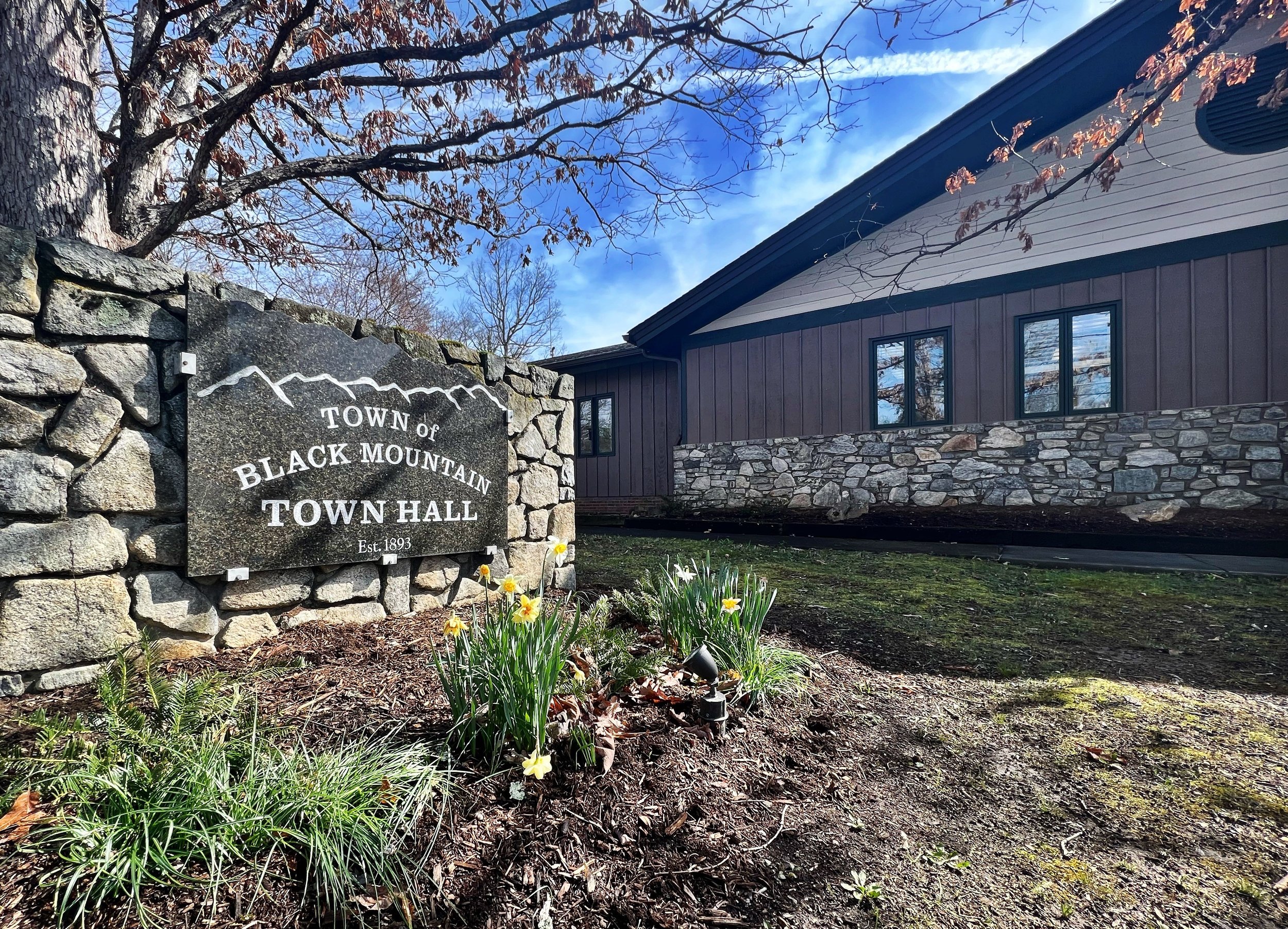
The Town of Black Mountain held a public hearing, June 15, on the 2026-27 budget. Photo by Fred McCormick
Two key words—”budget shortfall”— appeared at the top of the 2026-27 Town of Black Mountain budget draft presented, June 15, to citizens and elected officials. Reconciling an approximately $1.9 million gap between requested expenditures and projected revenues in the general fund, and an additional $918,000 deficit in the water fund, remained the main topic of discussion, throughout the public hearing on the document.
Following a series of workshops, the town council reviewed contributing factors and proposed adjustments, while receiving community feedback.
The presentation of the recommended budget draft identified 10 factors that contributed to the deficit in the general fund, which supports town operations. Increasing fuel costs, inflating prices of goods and services, rising tipping fees for the Buncombe County Landfill and jumps in costs of employee health coverage and retirement were included on the list. Mounting expenses attributed to deferred maintenance on facilities and aging equipment were also presented.
Increasing projected general fund revenues is addressed through a proposal to raise the ad valorem tax for Black Mountain residents from its current $0.321 per $100 of valuation to $0.35, while charging an additional $3.50 for solid waste removal. The combined measures are anticipated to increase the municipality’s annual revenue by approximately $683,000.
A $7 hike in green fees for the Black Mountain Golf Course, which has only partially reopened since it was damaged in September of 2024, is expected to produce an additional $154,000.
The 2026-27 budget will eliminate five full-time positions within the town, reducing payroll expenditures by more than $486,000. Those roles include three vacant posts: a project manager office that was added in 2022, an assistant manager position, added in 2024 and a public information office, which was approved at the beginning of the current fiscal year. Two additional occupied positions were also eliminated.
A one-year freeze on a vacant position in the town’s police department, and another for half of an unoccupied role split between the public works and water departments, rounded out the recommended staffing adjustments in the general fund.
Town employees will be directed to identify an additional $124,000 in savings, prior to July 31.
Six residents addressed the town council, which is expected to vote on the final draft, Tuesday, June 30, before the start of the next fiscal year. Many expressed support for funding emergency services within the town. Multiple commenters, residing in The Settings, recommended the town form a committee of residents to address the capital needs associated with the public safety building.
Former mayor Don Collins, who previously served on the town council, opposed the recommended increase in sanitation fees.
“We were told, when we were annexed, we would get free garbage pick-up, and that was one of the benefits we would get,” he said. “The next board comes in, and next you thing you know, they were going to charge a garbage tax. That’s one of the reasons I ran.”
He encouraged current elected officials to “look at the big things, and the little things, too.”
“If you’re not looking at the little ones, you’re going to miss the big things,” Collins said. “Somebody on this board needs to look at each and every budget.”
Councilmember Larry Harris emphasized a depleted unassigned fund balance as an area of concern.
“Our fund balance is getting very low,” he said, adding the Local Government Commission oversees revenue resources like bank loans. “We really couldn’t borrow any money with our fund balance So, we have to be very attentive to get it built back up.”
Mayor Michael Sobol expressed concerns that the growth of Black Mountain government outpaced its population.
Harris reflected on how the devastation of Helene impacted financial planning.
“We have some funds that, June 30, our interim town manager Richard Hicks will have budget amendments to clean up some of those things, as we move on to the fiscal year,” he said. “But, we have all the interactions and funds for Helene recovery, which you’re looking at three to five years, if not more, to get that deployed.”
Councilmember Doug Hay noted deferred maintenance on equipment and facilities as contributing factors to the budget shortfall.
“Small budgets are great, until they’re not, then you have to play catch-up,” he said. “Our job is to find the right balance of reducing expenses as much as possible, while also looking forward to what the town’s needs are today and what they will be in five years.”
The proposed tax increase, Sobol added, will require later adjustments to generate additional revenue.
“Future boards are going to have to raise taxes,” he said. “They’re going to have to raise revenues, whether through taxes or fees. We’re still at a point where we are living beyond our means.”
Some costs, including a 33% increase for wholesale water customers of the City of Asheville, are unavoidable for the town, according to Harris. Black Mountain will eliminate one full-time position within its water department and freeze half of a position, while delaying a promissory note for a loan to conduct a lead and copper line inventory until the 2027-28 fiscal year. Those cost-cutting measures, combined with a base rate increase from $6.14 to $13.14 per month for town water customers and an 18-cent usage rate increase, are projected to offset the shortfall in the water budget.
The draft recommended a budget of nearly $3.9 million for the Black Mountain Fire Department, which receives 59% of its financial support from the municipality and the remaining 41% from the county. The proposal for the department included an additional $264,720 to maintain a competitive pay structure by providing annual adjustments of $10,000 for firefighters and engineers and yearly salary increases of $5,000 for lieutenants. Administrative officials within the department will be given a 3% cost of living adjustment.
The budget process has been “excruciating” this year, according to Councilmember Alice Berry.
“We’ll get through this together,” she said.